

Antonio Canova’s Colossal Horse: A Neoclassical Masterpiece Emerges from the Shadows After 56 Years
In a triumphant return to the public eye, Antonio Canova’s monumental plaster sculpture, known as the Cavallo Colossale (Colossal Horse), has been meticulously restored and is once again captivating audiences. This neoclassical gem, hidden away in storage for over half a century, symbolizes not only the genius of one of Italy’s most celebrated sculptors but also the enduring power of cultural preservation. Unveiled in November 2025 at the Gallerie d’Italia in Milan, the sculpture’s revival marks a significant moment in art history, bridging the past with contemporary efforts to safeguard heritage. After spending decades dismantled and forgotten in the storerooms of the Museo Civico di Bassano del Grappa, the horse now stands as a testament to resilience, artistry, and collaborative restoration.
Antonio Canova (1757–1822), the Venetian-born master of neoclassicism, is renowned for his ability to infuse marble and plaster with ethereal grace and dynamic energy. Influenced by ancient Greek and Roman sculpture, Canova’s works often embodied ideals of beauty, heroism, and harmony. His famous pieces, such as Psyche Revived by Cupid's Kiss (now in the Louvre Museum) and The Three Graces (held in collections like the Victoria and Albert Museum), showcase his mastery of form and emotion. Canova rose to prominence in the late 18th century, serving popes, emperors, and royalty, including Napoleon Bonaparte, for whom he created several portraits. His style, characterized by smooth surfaces, anatomical precision, and subtle expressiveness, helped define the neoclassical movement, transitioning from the ornate Baroque to a more restrained, classical revival.
The Cavallo Colossale represents one of Canova’s final and most ambitious endeavors. Commissioned in 1819 by Ferdinand I of Bourbon, King of the Two Sicilies (formerly King of Naples), the sculpture was intended as the equine component of a grand equestrian monument. Canova, then in his sixties and at the peak of his career, crafted the full-scale plaster model between 1819 and 1821 in his Rome studio. Measuring an imposing 4 meters (13 feet) in height and 4.5 meters (14.8 feet) in length, the horse was painted green to mimic the patina of weathered bronze, giving it a lifelike, antique appearance. This preparatory model was crucial for the eventual bronze casting, capturing the animal’s powerful musculature, arched neck, and poised stance—evoking the majesty of ancient equestrian statues like the Marcus Aurelius in Rome.
Tragically, Canova passed away in Venice in 1822, before the monument could be completed. His pupil, Antonio Calì, took over the project, finishing the bronze version in 1829. The final equestrian statue, depicting Ferdinand I astride the horse, was installed in Naples’ Piazza del Plebiscito, where it remains a landmark. Meanwhile, the original plaster model found a new home through the efforts of Canova’s half-brother, Giambattista Sartori Canova, a bishop who inherited the artist’s estate. In 1849, Sartori donated the horse, along with numerous other plaster casts, sketches, monochromes, and documents, to the Museo Civico di Bassano del Grappa in the Veneto region. This generous bequest transformed the museum into a key repository of Canova’s preparatory works, highlighting his creative process.
For over a century, the Cavallo Colossale graced the museum’s halls, becoming a symbol of Bassano del Grappa’s cultural identity. Visitors marveled at its scale and detail, which conveyed the horse’s vitality through subtle vein textures, flowing mane, and alert ears. However, by the late 1960s, structural issues plagued the sculpture. Weighing several tons and supported by an inadequate internal framework, it began to show signs of instability—cracks, fragmentation, and overall deterioration. In 1969, museum officials made the difficult decision to dismantle it into over 200 pieces and relocate it to storage during building renovations. What was meant to be a temporary measure stretched into decades, as the fragments languished in precarious conditions, gathering dust and suffering further damage. Only the horse’s head remained on occasional display, a poignant reminder of the lost masterpiece.

The road to revival began in earnest in recent years, driven by a coalition of cultural institutions and philanthropists. The restoration project, spearheaded by the Comune and Musei Civici of Bassano del Grappa, received oversight from the Soprintendenza Archeologia Belle Arti e Paesaggio for the provinces of Verona, Rovigo, and Vicenza, with additional support from the Soprintendenza for Venice. Funding came primarily from Italy’s Intesa Sanpaolo bank through its acclaimed “Restituzioni” program, which has restored over 2,200 Italian artworks since 1989, and the British nonprofit Venice in Peril Fund, dedicated to preserving Veneto’s heritage.
Executed by the expert team at Passarella Restauri in Vigonza, near Padua, the restoration was a feat of technical and artistic ingenuity. Conservators first cataloged and analyzed the 200-plus fragments, uncovering hidden insights into Canova’s techniques. They discovered 19th-century additions—brick shards, pottery, metal planking, and extra plaster—that had been inserted for reinforcement but instead added over 400 kilograms (880 pounds) of unnecessary weight, exacerbating stresses. These were meticulously removed using precision tools like scalpels and micro-abrasives to avoid damaging the original material. An accidental find—a fragment of a late 18th-century book embedded in the plaster—added a layer of historical intrigue, possibly a remnant from Canova’s studio.
Reassembly involved piecing the fragments into nine major sections, ensuring seamless joins. A new internal metal framework, engineered by R.S. Ingegneria of Padua, was designed with earthquake-resistant features, distributing weight away from the legs and onto a reinforced base. This modern support system not only stabilizes the sculpture but also protects it from future seismic activity, common in Italy. Aesthetic touches included filling gaps with compatible materials and integrating paint in watercolor and tempera, applied in a slightly lighter shade to differentiate restorations from originals. The entire process was documented through videos and reports, shared on the museum’s digital platforms to engage the public.
Barbara Guidi, Director of the Civic Museums of Bassano del Grappa, described the project as “among the most spectacular and relevant Italian heritage restoration interventions of recent years,” emphasizing its role in rediscovering Canova’s methods. Silvia Foschi from Intesa Sanpaolo hailed it as a “true restitution to the community,” while Anthony Roberts of Venice in Peril Fund expressed pride in sponsoring the effort, noting its return to Bassano as a local milestone. Giordano Passarella, the lead restorer, called it a “unique professional challenge,” and Superintendent Andrea Rosignoli praised the collaborative problem-solving.

The restored Cavallo Colossale made its debut on November 28, 2025, as the centerpiece of the exhibition “Eternity and Vision: Rome and Milan, Capitals of Neoclassicism” at the Gallerie d’Italia in Milan. Curated to explore neoclassicism’s dual hubs, the show juxtaposes Canova’s work with pieces from artists like Giuseppe Bossi and Andrea Appiani, highlighting Rome’s classical roots and Milan’s innovative flair. The horse’s presence adds a monumental focal point, inviting viewers to appreciate its scale and symbolism amid related drawings, models, and artifacts. The exhibition runs through April 6, 2026, offering a temporary home before the sculpture’s permanent return to Bassano del Grappa.
This revival underscores broader themes in art conservation: the fragility of plaster works, the importance of interdisciplinary collaboration, and the value of public-private partnerships. In an era of climate threats and funding shortages, projects like this demonstrate how technology— from 3D scanning to seismic engineering—can breathe new life into old masters. For Bassano del Grappa, a town nestled in the Veneto foothills famous for its grappa distilleries and Renaissance bridges, the horse’s return elevates its status as a cultural destination, complementing nearby sites like Canova’s hometown of Possagno and its Gypsotheca Antonio Canova.
Beyond its artistic merit, the Cavallo Colossale embodies Canova’s fascination with equestrian themes, drawing from classical precedents like the Parthenon friezes and Renaissance masters such as Donatello. It reflects the political turbulence of post-Napoleonic Europe, where monarchs like Ferdinand I sought to legitimize their rule through grand monuments. Today, it invites reflection on restoration ethics: how much intervention is too much? The team’s reversible methods ensure future generations can revisit Canova’s vision.
As visitors flock to Milan and anticipate its homecoming, the Colossal Horse stands not just as a sculpture but as a bridge between eras—a neoclassical steed galloping into the 21st century.
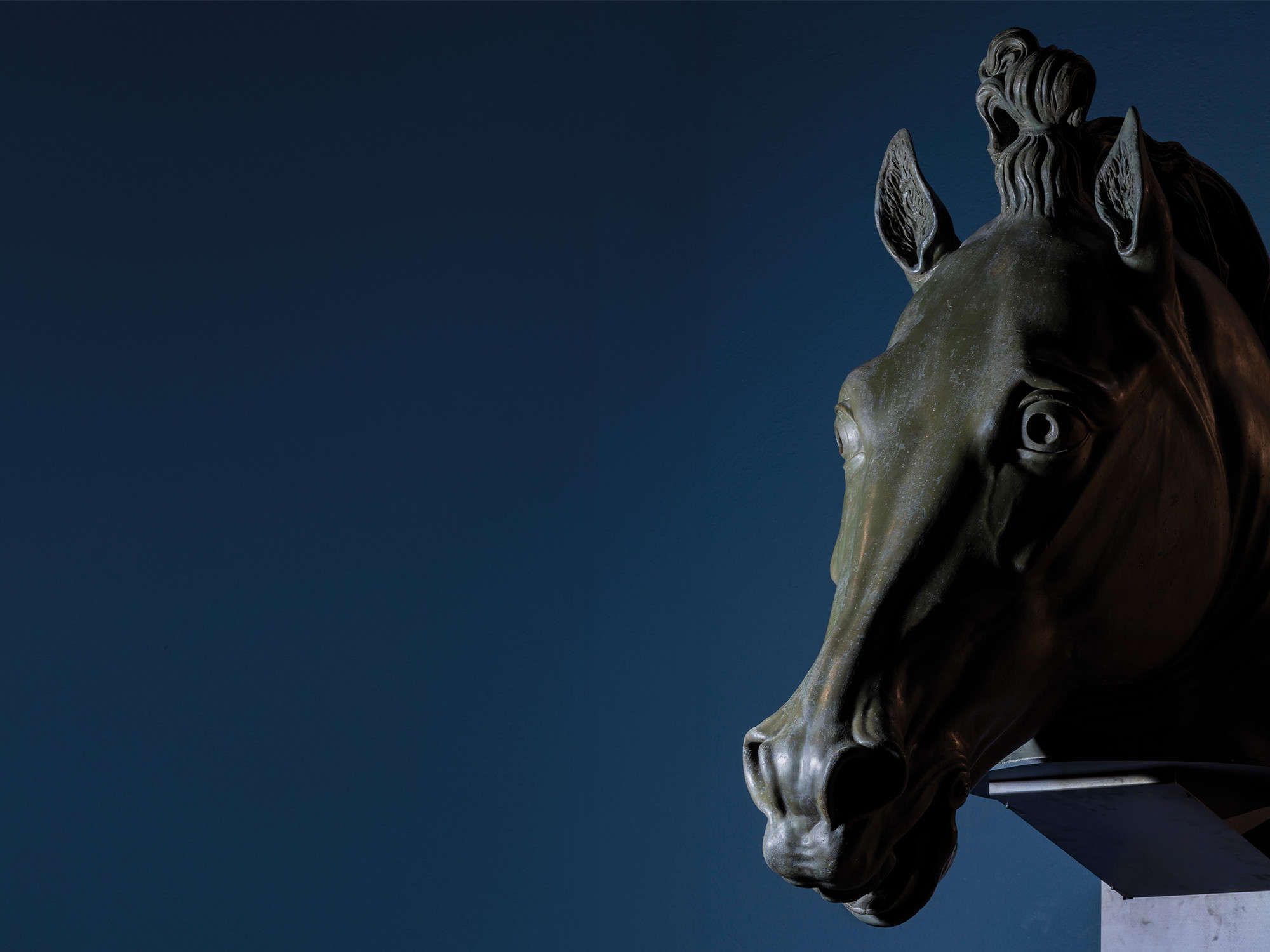
The project’s success has sparked interest in other forgotten Canova works, potentially inspiring similar initiatives. In Bassano, plans for a dedicated space at the Museo Civico will ensure the horse’s prominence, perhaps alongside interactive displays on its history. This event reminds us that art, like the horse it depicts, possesses an enduring spirit, ready to charge forth when given the chance.


FAQ
What is Antonio Canova’s Colossal Horse?
The Colossal Horse is a monumental plaster model created by neoclassical sculptor Antonio Canova between 1819 and 1821 as a preparatory work for an equestrian monument to Ferdinand I of Bourbon. It measures about 4 meters high and was painted to resemble bronze.
Why was the sculpture in storage for over 50 years?
Due to structural instability and deterioration, the sculpture was dismantled in 1969 during museum renovations at the Museo Civico di Bassano del Grappa and remained in storage, with fragments in precarious condition.
What did the restoration process involve?
The restoration included cataloging over 200 fragments, removing 19th-century additions, reassembling sections, and installing a new earthquake-resistant metal frame. It was carried out by Passarella Restauri with funding from Intesa Sanpaolo and Venice in Peril Fund.
Where can I see the Colossal Horse now?
It is currently on view at the “Eternity and Vision: Rome and Milan, Capitals of Neoclassicism” exhibition at Gallerie d’Italia in Milan until April 6, 2026, after which it will return to the Museo Civico di Bassano del Grappa.
Why is this sculpture significant?
As one of Canova’s last works, it exemplifies neoclassical ideals and serves as a symbol of Bassano del Grappa’s heritage, highlighting the artist’s preparatory techniques and the era’s political symbolism.