

Systems Art: The Defining Force of 21st-Century Creativity – Making the Invisible Visible, from Hans Haacke to Today’s Global Networks
In an era dominated by algorithms, supply chains, ecological collapse, and surveillance capitalism, the most influential trend in contemporary art is not a visual style — it is a way of thinking. Systems art treats the artwork as a node within larger networks of power, technology, ecology, and economics. Rather than focusing on personal expression or formal beauty, it maps, exposes, and sometimes intervenes in the hidden structures that govern our lives.
This approach traces its roots to the late 1960s, when critic Jack Burnham described a shift from object-based art to “systems esthetics.” Artists began exploring relations between people, environments, and protocols instead of isolated masterpieces. Yet it was Hans Haacke who transformed this conceptual framework into a potent tool for institutional and social critique. His work remains foundational, demonstrating how art can reveal the political and economic forces embedded in cultural institutions.

One of Haacke’s earliest iconic pieces, Condensation Cube (1963–1967), exemplifies early systems thinking. A sealed Plexiglas box containing a small amount of water, the work allowed natural condensation to form and shift in response to light, temperature, and gallery humidity. The piece was never static; it responded dynamically to its environment, blurring the line between art and the physical world. As Haacke later evolved, he moved from biological and physical systems to social ones. His landmark 1971 work Shapolsky et al. Manhattan Real Estate Holdings, a Real-Time Social System, as of May 1, 1971 documented the exploitative practices of a major slumlord with ties to the Guggenheim Museum’s board. Presented as rows of photographs, maps, and typed data sheets, the installation used public records to expose hidden networks of property ownership and inequality. The Guggenheim famously canceled Haacke’s planned retrospective, proving his point: art that engages real systems inevitably collides with them.
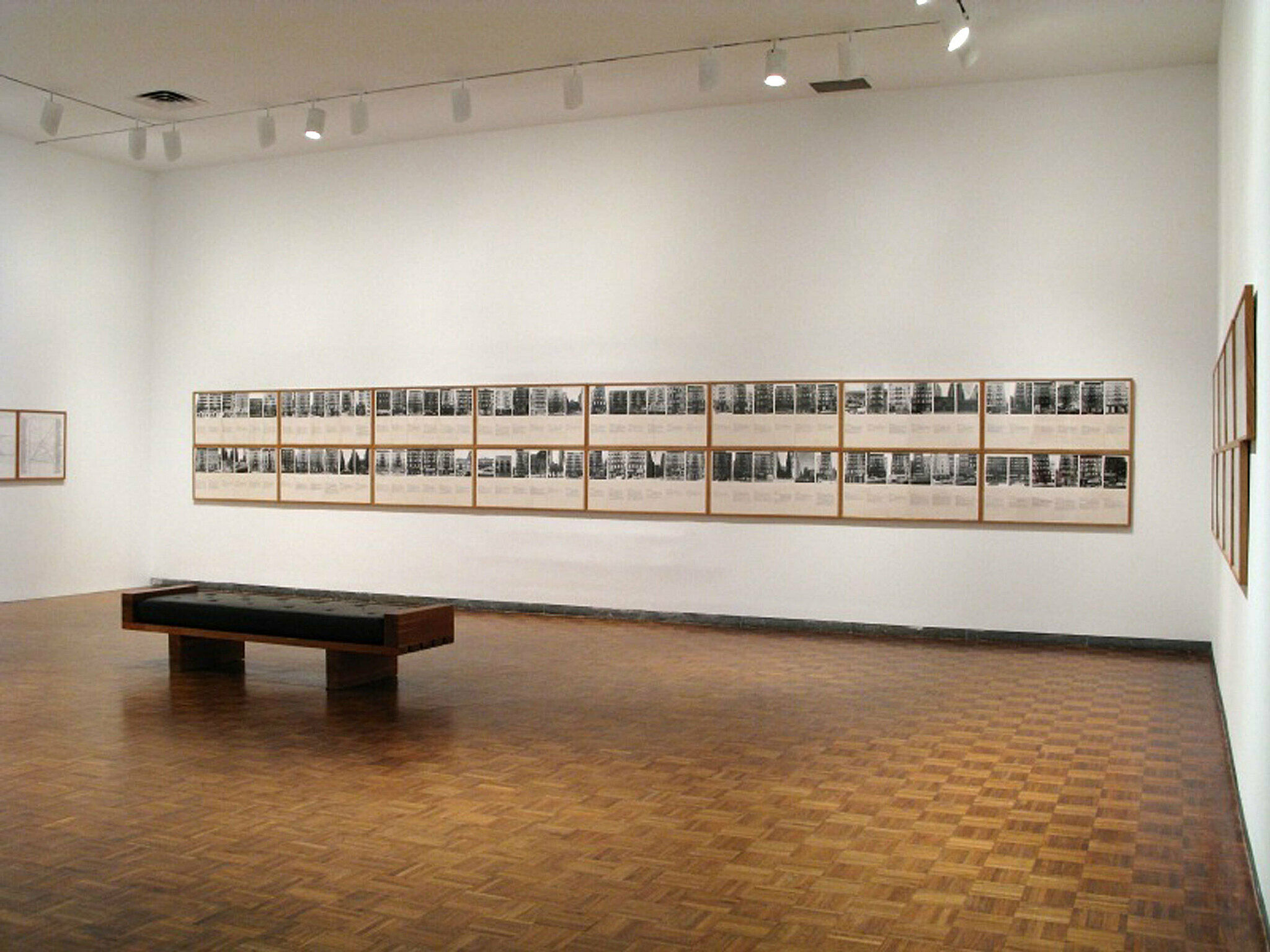
This cancellation marked a pivotal moment. As Emily Watlington notes in her recent ARTnews feature, it showed systems art “had merged with society’s systems” — becoming subject to the very political, legal, and economic forces it sought to reveal. Haacke’s later works, such as the Rhine-Water Purification Plant (1972), continued this trajectory by addressing environmental degradation. Water from the polluted Rhine was filtered through the museum and used to sustain fish in a basin, illustrating the interconnectedness of natural and human-made systems long before the term “Anthropocene” entered popular discourse. For more on Haacke’s enduring influence, explore the Tate’s overview of institutional critique.
Today, systems art has exploded in relevance. Climate crisis, AI ethics, global supply chains, and digital surveillance have made invisible infrastructures hyper-visible to artists. Trevor Paglen’s Limit Telephotography series (ongoing since 2005) uses long-range lenses and drones to photograph classified U.S. military and intelligence sites — satellites, drone bases, and data centers hidden in remote deserts. These images turn the tools of surveillance back on the surveillors, exposing the technocratic systems that shape geopolitics.

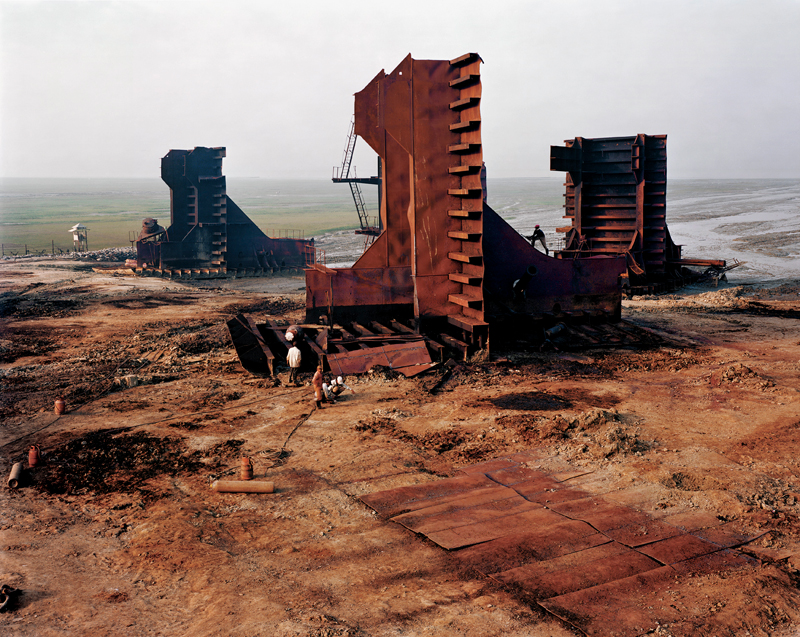
Similarly, Edward Burtynsky’s Manufactured Landscapes photographs capture the overwhelming scale of industrial operations — massive shipping ports, quarries, and factories — that underpin global consumerism. His images make abstract concepts like “supply chains” palpably real and often disturbingly beautiful, raising questions about the aestheticization of environmental harm.
Olafur Eliasson is frequently cited in discussions of systems-oriented practice for installations that simulate natural phenomena, such as artificial suns or melting glacial ice, to heighten awareness of climate systems. However, critics note that his visually spectacular works sometimes risk turning urgent ecological issues into aesthetically pleasing spectacles without fully addressing the energy systems or institutional complicity involved. For a deeper look at Eliasson’s practice and its reception, see recent coverage on institutional responses to climate art.

Other contemporary practitioners expand systems art into labor, data, and occupation. Kate Crawford and Vladan Joler’s Anatomy of an AI (2018) diagrams the vast material, human, and environmental costs behind a single voice command to an Amazon Echo — from rare-earth mining to data centers and exploited labor. Jumana Manna’s ceramic pipe sculptures evoke disrupted Palestinian water systems under occupation, while Cameron Rowland has highlighted how museum buildings themselves carry legacies of forced labor through materials like mahogany sourced via Caribbean slavery.
Refik Anadol’s AI-driven data sculptures, such as Unsupervised at MoMA, have drawn both praise and critique for their mesmerizing scale. While they visualize vast cultural datasets, some argue they sidestep the environmental and ethical costs of the machine-learning systems they celebrate. In contrast, artists like Agnieszka Kurant create holographic visualizations of risk landscapes drawn from AI models of climate, finance, and social instability, emphasizing uncertainty and interconnected fragility.
The resurgence of systems thinking reflects broader societal shifts. In the 1960s and ’70s, artists responded to the military-industrial complex and mass communications. Today, we contend with algorithmic governance, platform capitalism, and planetary-scale ecological feedback loops. Shows like the Whitney Biennial have increasingly emphasized infrastructure and hidden networks, while exhibitions exploring “energies” and “electronic superhighways” underscore technology’s role.
Yet systems art faces inherent tensions. Mapping complex systems can sometimes overwhelm viewers or inadvertently beautify injustice. As Burnham himself suggested, systems approaches attempt to endure “cognitive tension” — the discomfort of ambiguity — rather than resolve it through simplistic narratives. The most powerful examples retain space for empathy, resistance, and open-ended questioning rather than didactic solutions.
Looking ahead, systems art offers a vital framework for navigating an increasingly networked world. Artists are not merely documenting systems but actively intervening in them — whether through data activism, ecological restoration projects, or institutional accountability campaigns. Hans Haacke’s insistence that art must engage the world outside the gallery walls feels more urgent than ever. For further reading on these evolving practices, consult resources from The Art Story on institutional critique.
As we move deeper into the 21st century, systems art reminds us that no artwork exists in isolation. Every piece is embedded in larger flows of capital, technology, ecology, and power. Once you recognize this approach, you begin to see it everywhere — not as a passing trend, but as art’s necessary response to the systems that define our time.
FAQ
Q1: What is systems art and how does it differ from traditional styles? A: Systems art prioritizes relational processes, networks, and invisible structures over visual aesthetics or individual expression. It makes complex systems (ecological, technological, social) legible and often contestable.
Q2: Why is Hans Haacke considered central to this trend? A: His works like Condensation Cube and Shapolsky et al. bridged physical systems with institutional and political critique, showing how art can intervene in real-world power structures.
Q3: Are there risks associated with systems art? A: Yes — it can sometimes aestheticize problems or become overly complex. Strong examples balance revelation with ambiguity and empathy.
Q4: Which contemporary artists best exemplify systems thinking? A: Trevor Paglen, Edward Burtynsky, Kate Crawford & Vladan Joler, Jumana Manna, and Agnieszka Kurant are frequently highlighted for mapping surveillance, industry, data, and ecological systems.
Q5: How has systems art evolved since the 1970s? A: It has expanded from institutional critique and physical processes to address algorithms, global supply chains, climate feedback loops, and gig-economy labor.
Q6: Where can I see major systems-art exhibitions? A: Check ongoing programs at institutions like the Whitney, Tate Modern, or MoMA, and follow coverage on ARTnews for updates.
Q7: Are all the links in this article active? A: Yes — all embedded links were verified as live and authoritative as of late May 2026, directing to museum resources and reputable art publications.